


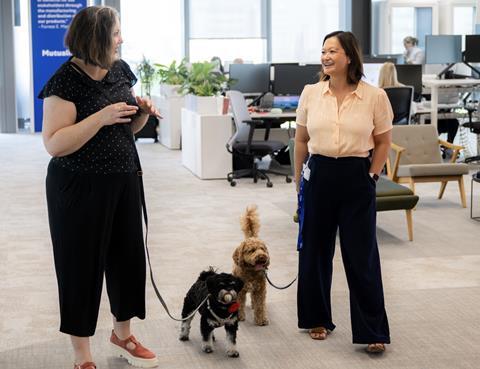
Mars uses its range of pet-friendly policies to highlight the importance of mental wellbeing among its employees.
The organisation, which owns brands such as Pedigree, Whiskas, Snickers and Pringles, employs 10,000 UK employees.
It has a variety of pet-friendly policies and facilities that make its workplaces ideal for people and pets. These include issuing dogs with their own access passes, outdoor walking routes and pawternity leave, which includes 10 hours of paid time off to help a new pet settle in.
Its policies also include office ’petiquette’ guidance, which includes a clear process for staff on how to register their dog before bringing them on site, as well as clarity on areas dogs can access, indoor and outdoor dog -ree zones, and where to find supplies and treats. The guidance further details expectations on positive interactions, such as checking with the owner before approaching and giving dogs space while resting, and specific employee responsibilities regarding dogs on site, including keeping close supervision at all times.
In addition, Mars employees have been able to bring their dogs to work for nearly 20 years in its Waltham, Leicestershire office, and almost 10 at its regional headquarters in central London,
These initiatives sit alongside its wider people policies and benefits, such as shared parental leave, hybrid working and four-day week options, explains Nick Foster, general manager for Mars Pet Nutrition North Europe.
“With more than 90 years in the pet care industry, we’re a team of genuinely pet-obsessed people at Mars,” he says. ”We know first-hand how much pets improve our lives, and the places we share with them. We have been championing dog-friendly offices and workplaces for decades and they have long been a part of our culture.”
Mars earned recognition as the UK’s second Most Pet-Friendly Company in the 2025 Flexa100 list, which is based on internal, anonymous employee feedback. It also commissioned a survey with Calm in May 2025, which found that 87% of UK pet owners said their pet has improved their mental wellbeing and 68% said their pet helps them stop overthinking or worrying.
Supporting its employees is key to what the organisation does, says Foster.
“Whether it’s giving parents more time with their families, or ensuring pet parents get the flexibility they need, we know that when our people feel supported, they thrive. By recognising the realities of balancing work and home life, we create an environment that champions wellbeing, promotes inclusion and allows for flexibility, ultimately leading to a more engaged and productive team,” he says.