


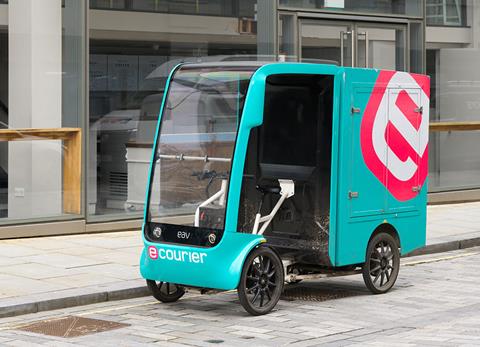
A total of 46 couriers have joined a legal case against eCourier, the Royal Mail‑owned delivery firm, in a dispute over how they should be classified at work.
Those involved argue they have been incorrectly treated as self‑employed contractors rather than workers, a distinction that would entitle them to rights such as the national minimum wage and paid annual leave.
They say the degree of oversight imposed on them, including how deliveries are assigned and expectations around their availability and performance, is inconsistent with genuine self‑employment.
The group also alleges that they have not been given a written statement of employment particulars, something they say they are legally owed.
The claim was initiated last summer by Leigh Day and the Independent Workers’ Union of Great Britain (IWGB) with around 15 couriers, and the organisations believe many more could ultimately qualify to join.
Leigh Day previously brought the high‑profile worker‑status case against Uber, which the Supreme Court decided in 2021, confirming that the organisation’s drivers were workers.
IWGB has supported eCourier drivers in industrial action in both 2019 and 2024, citing low pay and failures to provide statutory holiday pay. The union maintains that eCourier has relied on “bogus self-employment” to cut costs while transferring financial risk onto drivers.
Mandy Bhattal, employment partner at Leigh Day, said: “Drivers are continuing to come forward because they recognise that their working arrangements may not match what the law considers to be self-employment. We would encourage any current or former eCourier drivers who think this applies to them to seek advice and consider joining the claim as soon as possible.”
Alex Marshall, president of the IWGB Union, added: “This case highlights the government’s failure to tackle the deep injustice that runs through the gig economy. While ministers promote the Employment Rights Act as a once-in-a-generation advance for workers, they continue to ignore the elephant in the room: gig economy [organisations] are still being allowed to opt out of basic workers’ rights altogether.
“For employers that want to deny their workforce fair pay and protections, the gig economy remains wide open for business. eCourier is a clear example of how these loopholes are being exploited. Workers there are forced to organise, strike and take legal action simply to secure the rights they should already have under the law.”
A spokesperson for eCourier said couriers can choose to work either as workers or as self‑employed contractors, and that most opt for the latter arrangement.
This article is based on a piece written for Personnel Today