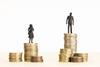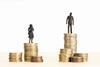


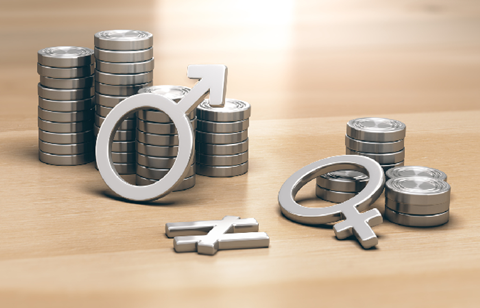
The gender pay gap in the UK has been underestimated for the last 20 years by the Office for National Statistics (ONS), according to analysis by the British Journal of Industrial Relations.
It found that figures used since 2004 by the ONS’ Annual survey of hours and earnings (ASHE) have consistently under-reported the gender pay gap by a “small but noteworthy margin” of 1%.
The research found that the ONS weighting scheme under-represents smaller, private-sector organisations, and over-represents larger and public-sector employers. The level of pay in these larger organisations is generally higher, and the pay differences between men and women within jobs are generally smaller.
The British Journal of Industrial Relations’ estimates, based on new cross-sectional weights that take account of biases, suggest that the gender pay gap is wider, and that a review of the methodology for ASHE is required to improve the reliability and accuracy of earnings data.
These findings may have wide-reaching impacts on pay decisions, because the ASHE is used as a point of reference for employers and industry bodies including the Low Pay Commission, the Office for Equality and Opportunity, and the Office for the Pay Review Bodies.
Tom Heys, pay reporting lead at law firm Lewis Silkin, said: “Many employers benchmark their own gender pay gaps against national figures, so it’s important that those figures are as accurate as possible. That said, no one has been under the illusion that the gender pay gap, or wider gender inequality at work, has somehow been fixed.
“If the headline gap is slightly larger than previously thought, it doesn’t change the fundamental issues that government and employers still need to tackle. What it may do is sharpen the political focus and strengthen the case for broader measures to address the complex drivers of pay gaps.”
An ONS spokesperson said: “[The] research raises some interesting questions about the best way to weight our survey data. However it’s worth noting that, even if new methods were used, the overall impact on the gender pay gap would be small.
“We have recently introduced a number of improvements to the [ASHE], with more planned in the coming years.”