

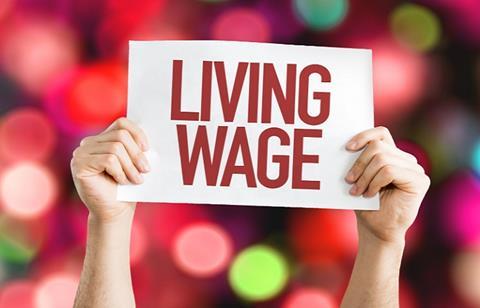
The real living wage, the voluntary hourly rate paid by more than 16,000 employers, has increased by nearly 7% for 2025-2026.
The Living Wage Foundation has announced the living wage outside London will increase from £12.60 per hour to £13.45, a 6.7% increase. The living wage rate inside the capital, meanwhile, rises by 6.9%, from £13.85 to £14.80.
Recent research by the Living Wage Foundation showed that many of Britain’s 4.5 million low-paid workers have struggled to make ends meet. Two-fifths (42%) have used foodbanks in the past year, rising to 56% for low-paid workers with dependent children.
The real living wage is higher than the government’s statutory minimum wage rate, the national living wage (NLW), which for those aged 21 and over is currently £12.21.
The voluntary rate is independently calculated based solely on what is needed to cover living costs, including everyday household costs such as rent and energy bills, childcare and transport, as well as items like a winter coat for children.
The real living wage applies to all workers over the age of 18 working for a living wage employer.
A full-time worker earning the new, real living wage would earn £2,418 a year more than a worker earning the current government minimum. In London, a full-time worker on the new real living wage rate would earn an additional £5,050 a year compared to a worker on the current NLW.
The number of employers signed up to pay the real living wage has continued to grow, with nearly 2,500 new accreditations over the past year.
Living wage employers commit to paying all their staff, as well as their third-party contractors like cleaners and security guards, at least the real living wage.
Across the UK, one in seven employees now work for an accredited living wage employer.
Katherine Chapman, executive director of the Living Wage Foundation, said: “We all need a wage that covers life’s essentials, and the real Living Wage is the only UK wage rate independently calculated based solely on what is needed to cover rising living costs.
“The new rates announced today will make a massive difference to workers and their families, helping them to better cope with the costs of rent, bills, food and other essentials, and to live with stability and security.
“It remains a tough time for low-paid workers, with 4.5 million people still earning less than the real Living Wage and struggling to escape the grip of in-work poverty. That’s why we encourage as many employers as possible to do the right thing and commit to paying a wage that reflects the real cost of living.
“Despite the challenges businesses face, our movement continues to grow, with over 16,000 employers now accredited. These leading employers are showing that paying the real Living Wage has a far-reaching impact on staff, businesses and society.”
Alessandro Dudech, chief operating officer of fashion retailer Uniqlo UK, which has recently been accredited by the Living Wage Foundation, added: “We believe that ensuring our employees are fairly compensated for their hard work is essential for fostering a motivated and productive workforce.
“Uniqlo’s investment in our UK team is in line with our ambitious growth plan here, enabling us to be an attractive employer of choice. We are proud to join the ranks of other responsible employers who are leading the way in promoting fair pay and improving the quality of life for their employees.”
The living wage rates are calculated by the Resolution Foundation think tank, with oversight from the Living Wage Commission, which includes academics, trade unionists, chief executives and chief people officers.
The Living Wage Foundation encourages living wage employers to pay the new rates as soon as possible, but allows organisations until May 2026 to implement these as it takes time to reforecast budgets.
The national minimum wage and national living wage for April 2026 will be announced at, or shortly before, the Budget on 26 November. In August, the Low Pay Commission revealed that its central estimate for the national living wage was £12.71, a 4.1% increase.