


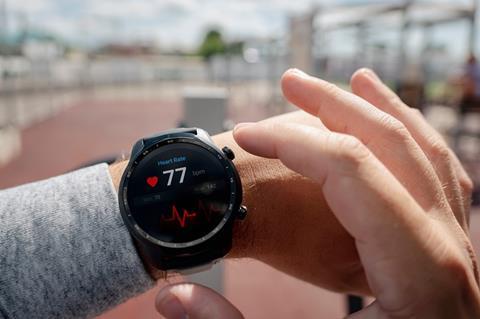
- Tracking their health through wearable technology can help employees turn their everyday behaviours into meaningful insights.
- Data and AI analysis from wearables can help employers identify patterns of behaviour and predict potential future issues.
- Privacy safeguards and governance should be adhered to when an initiative such as this is implemented.
Artificial intelligence (AI) and smart technology have become decidedly popular, with a third of millennials and a quarter of generation Z using AI and wearables to track sleep, steps and blood pressure, as well as creating personalised fitness, nutrition and mental health plans, according to Benenden Health’s January 2026 Health and wellbeing trends report. Some employers have jumped on the bandwagon and now offer this technology to their employees, but for those who have yet to take the plunge, it is worth considering how it can inform their healthcare and wellbeing strategies.
How AI and smart technology is used
There is currently a range of smart technology available in the UK, including wearables such as smart watches and AI-enabled rings. These track health metrics such as diet, body temperature and blood pressure. There are also wearables that monitor fatigue, posture and environmental exposure in real time, while Benenden Health’s research shows 37% of UK adults use wearables to track heart rate, sleep and stress.
Examples of AI tools designed specifically for use in the workplace include those designed for ergonomic or exoskeleton monitoring, says Riaan van Wyk, senior consultant at Barnett Waddingham, part of Howden.
“Employees wear these tools, which automatically track daily steps and activity patterns, among other measurements,” he says. ”These are enhanced by AI by processing the data to provide predictive analytics, recommendations and prompts for better habits, and integration into apps to predict various health outcomes and risks.”
While smart technology and wearables can help employees understand their health, they also encourage and motivate them to improve this and stay active. Wearables can also help them to understand how everyday behaviours affect their health and influence how they feel and perform at work.
Duncan Schofield, innovation lead at Benenden Health, says: “Modern wellbeing platforms analyse patterns and translate them into early risk alerts, and practical coaching to help people build healthier habits. AI helps make sense of this by turning complex metrics into clear, personalised insights. It can highlight trends and flag potential concerns.”
Wellhub’s March 2026 research shows that employees are more focused on their sleep and recovery than weight loss or strength training. Smart technology and wearables can help with this by bridging the gap between employees’ rest and their performance at work.
Luke Bullen, vice president of UK and Ireland at Wellhub, says: “If biometrics show an employee is running on empty, AI can suggest meditation or a sleep preparation routine. It’s a more human way of using technology and prioritises long-term health. We’re seeing an appetite for hyper-personalisation because it removes the guesswork for employees.”
Wellbeing insights
Wearable data can provide organisations with valuable insights into workforce wellbeing without exposing individual health information.
Before employers receive any employee health data from the technology, they should first ensure they have obtained consent. They should also bear in mind trust and ethical concerns, in case staff are worried about being monitored or judged by their employer, as well as General Data Protection Regulation (GDPR) and UK data protection laws that require strict governance, consent and transparency.
“Data is fed back to the employer in an anonymised and aggregate format via integrated wellbeing platforms or insurer apps,” says van Wyk. “Employers can then use these insights to identify trends among various groups of their workforce, which might enable targeted interventions such as wellbeing programmes or additional mental wellbeing resources.”
Trends to look out for once the information has been centrally collated include sleep disruption, stress patterns or musculoskeletal risks. This can allow organisations to move beyond reliance on employee feedback to offer informed wellbeing strategies that target the issues affecting their workforce.
“It means instead of throwing money at a generic wellbeing initiative, employers can deploy targeted support where it’s actually needed. It turns wellbeing from a fuzzy concept into a hard business metric,” says Bullen.
Employers should also consider the risk of data misinterpretation, because while AI can identify patterns, it may not get everything right.
Shaping a healthcare and wellbeing strategy
Vitality’s January 2025 Britain’s healthiest workplace report found that 63% of employees want their employer to do more to support their health. Wearables and AI can assist with this by helping organisations move from reactive health support to more proactive, data-driven wellbeing strategies.
Employers have a key role to play in supporting the health of their employees, in a way that not only benefits them, but the business and productivity as well, says Gary Impett, director of corporate sales at Vitality.
“There is no one-size-fits-all solution, and having data that allows employers to best understand employees, their health and demographics enables them to put in place health and wellbeing strategies that are right for their workforce,” he says.
By identifying patterns in fatigue, stress or physical strain, employers can intervene earlier and design initiatives that better reflect how their employees work. This approach also helps ensure wellbeing programmes feel more relevant to different parts of the workforce, which can improve long-term impact and staff engagement.
But methods such as AI and wearables should only form part of a holistic approach to a healthcare or wellbeing strategy, says van Wyk.
“They should be seen as one of many tools at the employer’s disposal,” he explains. ”Smart technology should be used with a well-designed needs assessment, employee collaboration through workshops and focus groups, and a thorough review of the existing strategy to recommend any changes.”
While smart technology can be a helpful part of a wellbeing strategy, employers should consider equity and inclusion challenges, because wearables must work for everyone and not just those who are willing and able, adds Debra Clark, head of wellbeing at Everywhen.
“They should also bear in [mind] the cost of buying wearables for all employees without knowing the value the data they provide may give, and whether it is actually a good investment,” she explains. ”In addition, they could experience low employee engagement or inconsistent usage where people lose interest after the novelty fades, or if employees already have their own wearable and don’t want duplication.”
Impact on preventative health support
Another benefit of smart technology is that it can highlight early warning signs, such as declining sleep quality, health risks or rising stress levels, before they develop into more serious health concerns. This can help identify where employer’s preventative efforts should focus, such as fatigue in shift roles or stress hot spots in particular teams, and enable prevention to become continuous rather than occasional.
“The rise of wearable technology has accelerated the shift from reactive healthcare to prevention, by making everyday behaviours visible, measurable and actionable,” says Impett. ”This creates the opportunity to intervene earlier in ways that genuinely improve long‑term health.”
After being compiled anonymously, preventative data can be used to design targeted interventions and integrated in corporate healthcare strategies. Employers can link the interventions to incentives such as rewards or shopping discounts to encourage employee participation.
“If employers can use AI to nudge an employee toward better habits before they burn out or develop a chronic issue, everyone wins,” says Bullen. “The employee stays healthy, and the business avoids absenteeism costs.”
Smart technology and AI can, therefore, be useful tools to inform a healthcare and wellbeing strategy, providing employers with helpful insights into employees’ health and enabling them to see where they could make improvements to further support their workforce.