


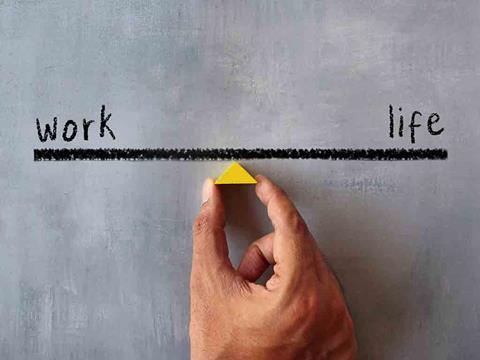
Three-quarters (74%) of UK hybrid workers, working a mix of at home and on site, said they have a good work-life balance and are happy, according to research by health benefits provider Health Shield Friendly Society.
ItsThe Britain at work report, which surveyed 975 UK working adults over the age of 18 in full or part-time employment, also found that two-thirds (64%) of respondents who work entirely remotely said they have at least a good work-life balance, and 71% of those who work entirely on site have at least a good work-life balance.
Meanwhile, 28% reported a work-life balance that was less than good and 31% cited lack of flexible work arrangements as a barrier to achieving a healthy work-life balance. Only 7% of respondents across all working arrangements rated their work-life balance as poor or very poor.
Remote workers reported lower levels of happiness and motivation, at 59%, and take an average of 11.2 days a year off sick compared to 6.7 days for hybrid and 5.8 days for on-site workers. Remote workers were also less likely to say their employer supports their wellbeing, at 28% compared to 38% of those hybrid workers or those based on-site.
Two-fifths (40%) said work frequently, or always, interferes with personal or family life, 35% cited high workload or job demands as a barrier to work-life balance, and 30% long working hours.
A quarter (24%) mentioned having difficulty disconnecting from work and 11% cited not having enough support from their employer.
A total of 93% of respondents who feel their employer supports their wellbeing a lot are happy and motivated in their work, with 98% also feeling valued and supported.
Paul Shires, director at Health Shield, said: “Employers have an important opportunity to listen to their teams by providing flexible, inclusive solutions which enable them to thrive both at work and home. This can be achieved by tackling the real barriers, such as excessive workloads, long hours and limited flexibility, and by considering different needs across the workforce.”