


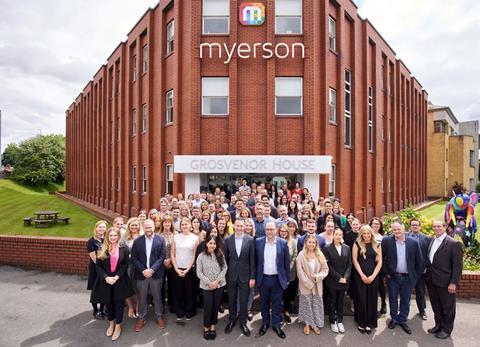
Following its transition to employee ownership in September 2024, law firm Myerson Solicitors established an employee engagement committee (EEC) to align employee experience with its strategic direction.
The Altrincham, Greater Manchester-based firm employs more than 160 employees as solicitors, paralegals and in its HR, finance, IT, marketing and business development teams.
Its EEC is an employee forum chaired by people director Jordanna Reynolds and the employee trustee from its employee-owned model. Staff from all departments, roles and levels of seniority are invited to volunteer for one year by the people and culture team to ensure inclusive representation across the firm.
Meeting every quarter, members engage with colleagues, gather feedback and share insights. The aim is to provide a structured channel for employees’ voices, ensuring this is embedded into decision-making.
The EEC plays a central role in shaping the firm’s benefits strategy, giving access to honest insight into how staff experience working there, across different roles, career stages and life circumstances, explains Reynolds.
“It helps ensure benefits remain an impactful, evolving part of our employee value proposition,” she says. ”Feedback gathered directly informs board-level decisions around wellbeing support, flexibility, family-friendly policies, learning and development, and how benefits are communicated and accessed. it helps us make decisions based on real employee experience, rather than what we think people might want.”
The committee has helped with priorities emerging from the firm’s annual employee engagement survey, the decision to harmonise shared parental leave and adoption leave with maternity leave, and shaping wellbeing initiatives, including physical, financial and mental health.
By positioning the EEC as a genuine governance body, Myerson receives more open, constructive and forward-looking feedback, ensuring employees’ views will be listened to and acted upon. This has strengthened trust, transparency and engagement, enabling the board and people and culture team to design benefits that are relevant, sustainable and aligned with its culture and wellbeing aims.
The most useful feedback comes when asking open, experience-based questions and giving people permission to be honest, explains Reynolds..
“Rather than asking whether a particular benefit is working, we focus on questions such as what genuinely supports employees’ wellbeing, what feels missing, or what would make the biggest positive difference to their, and their peers’, working lives,” she says. ”We also encourage people to reflect on real experiences rather than hypothetical scenarios.”
As an employee-owned firm, Myerson believes it is essential that employees have a meaningful and structured role in shaping decisions that affect their working lives, including their benefits.
“Ultimately, benefits are not just about policies or products, they are a reflection of organisational values. By involving employees directly in this, we reinforce our commitment to being a genuinely people-focused business, built together for the long-term,” Reynolds says.